%20--%3e%3csvg%20version='1.1'%20id='Layer_1'%20xmlns='http://www.w3.org/2000/svg'%20xmlns:xlink='http://www.w3.org/1999/xlink'%20x='0px'%20y='0px'%20viewBox='0%200%201440%20384.8'%20style='enable-background:new%200%200%201440%20384.8;'%20xml:space='preserve'%3e%3cstyle%20type='text/css'%3e%20.st0{fill:%23010101;}%20%3c/style%3e%3cg%3e%3cpath%20class='st0'%20d='M156.5,162.6c0,32.3-14.1,52.7-42.3,61.1l51.3,71.2h-42.1L76.6,229H33.1v65.9H0v-196h72.9%20c29.9,0,51.3,5,64.2,15.1C150,124.2,156.5,140.3,156.5,162.6z%20M112.5,190.3c6.7-5.8,10.1-15.1,10.1-27.9c0-12.8-3.5-21.6-10.4-26.4%20c-6.9-4.8-19.3-7.2-37-7.2H33.1V199h41.2C93,199,105.7,196.1,112.5,190.3z'/%3e%3cpath%20class='st0'%20d='M407.1,124.7c-9.6,0-17.5,2-23.7,5.9c-6.2,3.9-9.3,9.9-9.3,17.8c0,7.9,3.1,14,9.3,18.2%20c6.2,4.2,19.3,8.7,39.4,13.6c20.1,4.9,35.2,11.7,45.4,20.5c10.2,8.8,15.3,21.7,15.3,38.8c0,17.1-6.5,31-19.3,41.6%20c-12.9,10.7-29.8,16-50.8,16c-30.7,0-57.9-10.6-81.6-31.7l20.8-25c19.8,17.2,40.4,25.8,61.7,25.8c10.7,0,19.1-2.3,25.4-6.9%20c6.3-4.6,9.4-10.7,9.4-18.2c0-7.6-2.9-13.5-8.8-17.7c-5.9-4.2-16-8-30.4-11.5c-14.4-3.5-25.3-6.6-32.8-9.5%20c-7.5-2.9-14.1-6.7-19.9-11.4c-11.6-8.8-17.4-22.2-17.4-40.4s6.6-32.1,19.8-41.9c13.2-9.8,29.5-14.7,48.9-14.7%20c12.5,0,25,2.1,37.3,6.2c12.3,4.1,23,9.9,32,17.4l-17.7,25c-5.8-5.2-13.7-9.5-23.6-12.9C426.5,126.4,416.7,124.7,407.1,124.7z'/%3e%3cpath%20class='st0'%20d='M690.2,98.9V130H585.6v51.9h93.9v29.4h-93.9v52.4h108v31.1H552.5v-196H690.2z'/%3e%3cg%3e%3cpath%20class='st0'%20d='M868.7,250.3l-19.6,44.6h-35.3l86.4-196h35.3l86.4,196h-35.3l-19.6-44.6H868.7z%20M953.4,219.8L917.8,139%20l-35.6,80.8H953.4z'/%3e%3cpath%20class='st0'%20d='M1233.6,162.6c0,32.3-14.1,52.7-42.3,61.1l51.3,71.2h-42.1l-46.8-65.9h-43.5v65.9h-33.1v-196h72.9%20c29.9,0,51.3,5,64.2,15.1C1227.1,124.2,1233.6,140.3,1233.6,162.6z%20M1189.6,190.3c6.7-5.8,10.1-15.1,10.1-27.9%20c0-12.8-3.5-21.6-10.4-26.4c-6.9-4.8-19.3-7.2-37-7.2h-42.1V199h41.2C1170.1,199,1182.8,196.1,1189.6,190.3z'/%3e%3cpath%20class='st0'%20d='M1380.5,129.2v165.7h-33.1V129.2H1288V98.9h152v30.3H1380.5z'/%3e%3c/g%3e%3cg%3e%3crect%20x='234.9'%20y='0'%20class='st0'%20width='29.1'%20height='384.8'/%3e%3c/g%3e%3c/g%3e%3c/svg%3e)
Considered Spaces by Stephanie Hunt | Rise Art
Considered Spaces
The value of art for curators, writers, designers, and collectors in their most meaningful spaces.
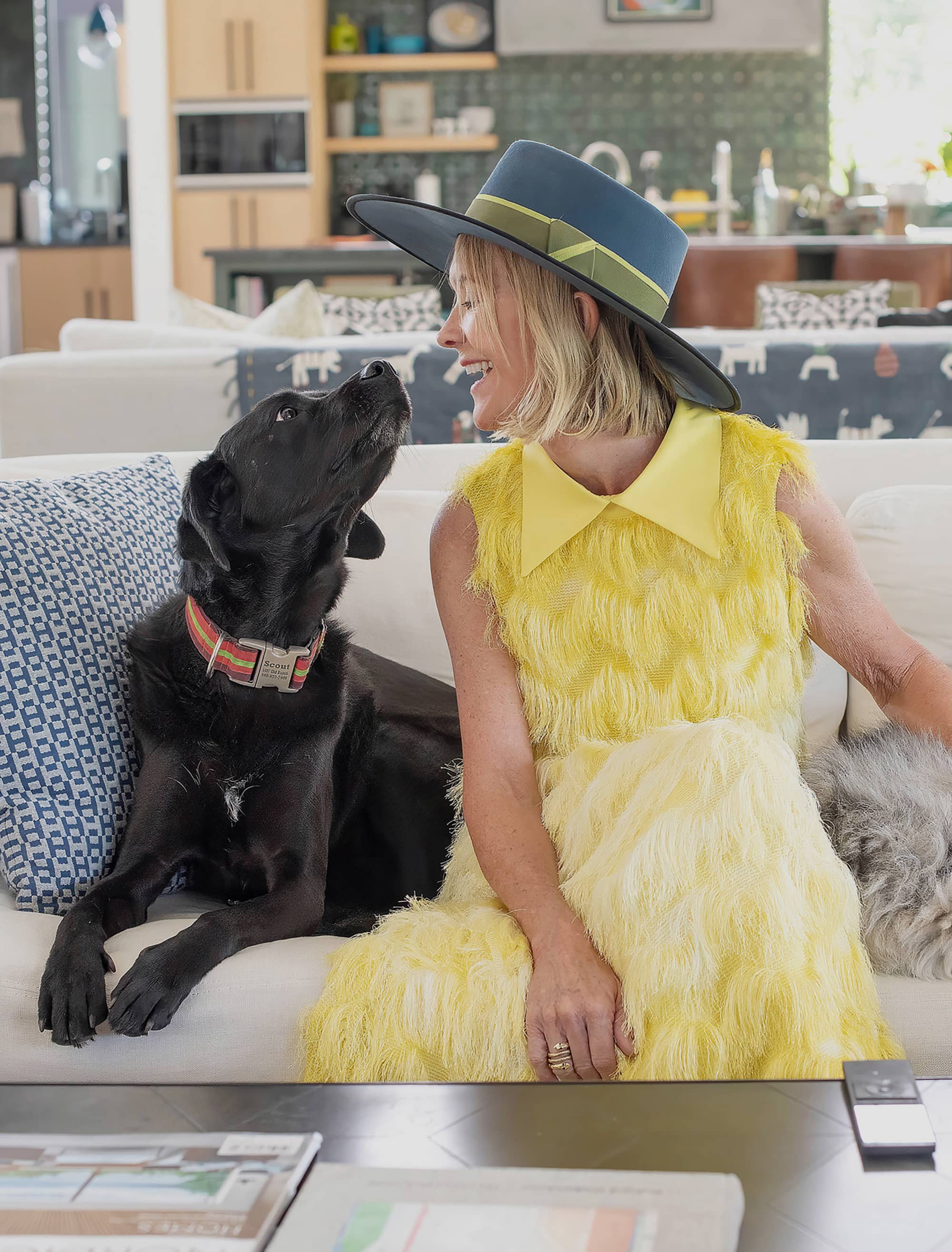
Stephanie Hunt
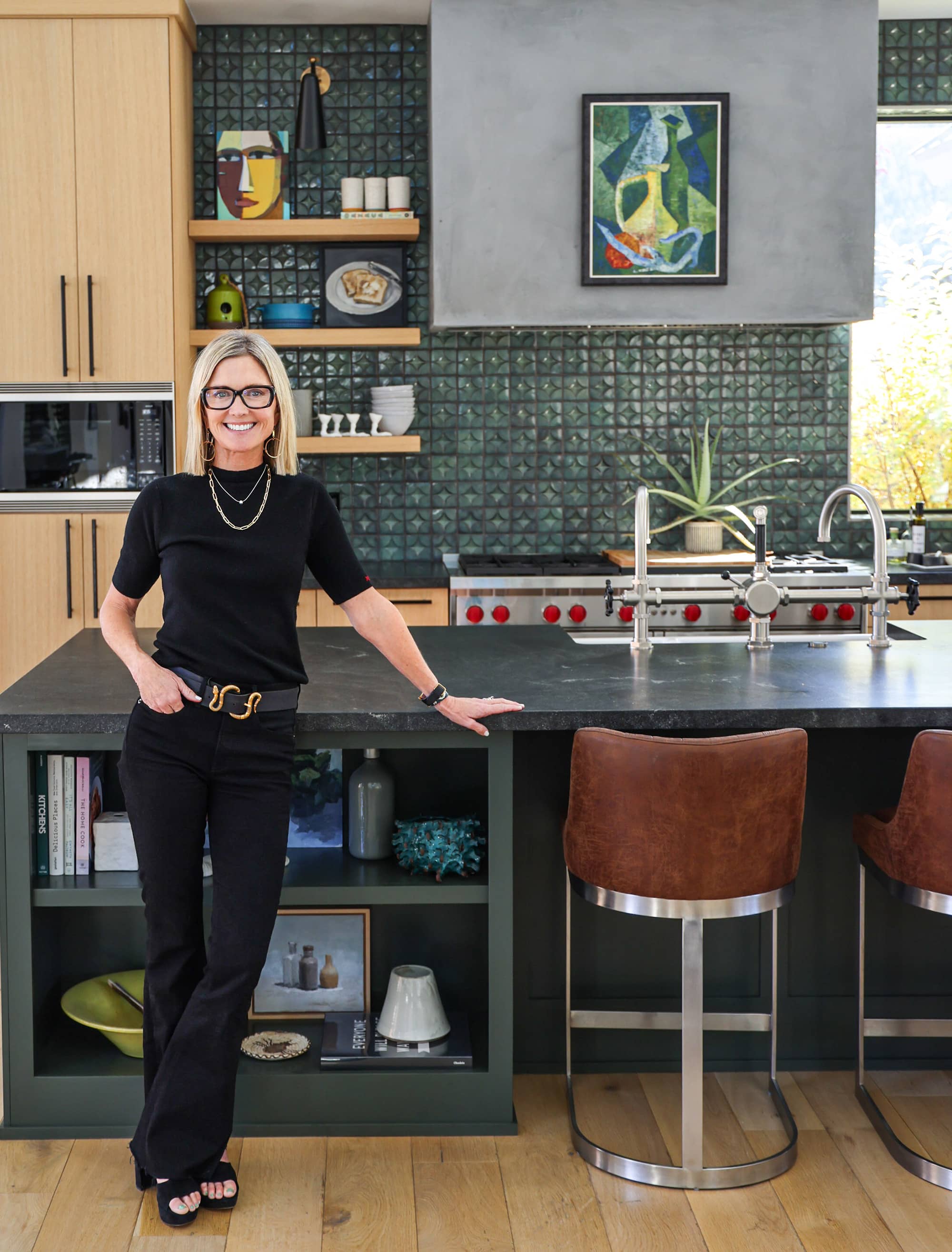
Stephanie Hunt is the founder and creative director of design firm and lifestyle brand The Flairhunter. With over two decades of experience, the Architectural Digest pro designer is known for her colourful aesthetic, personalised art sourcing, and use of custom and vintage finds. Palm Springs midcentury homes, Wyoming cattle ranches, Parisian flea markets, and beach boardwalk graffiti were all part of Hunt’s early education and play an important role in her unique design sensibility.
Travel inspiration and global storytelling are important parts of your design philosophy. How do you curate art to capture both place and personality within a single space?
I often dream about and design wall space before I even think about the specific furniture pieces. I suppose I’m wired that way, having been raised by an artist, with my parents and grandparents being incredible art collectors. It’s in my blood. I don’t ever want art to simply match by colour. I need a space to feel cohesive and make sense. So, while I ensure the colours are complementary, it’s always in service of creating a space that feels unified rather than overly coordinated.
Travel and global storytelling are integral to my brand, history, and design aesthetic. I encourage clients who share that sensibility to visit galleries while travelling, purchase pieces they love, and have them shipped home. I also tell them not to get too hung up on where a specific piece will go. Rather, to trust that the sight of it back home will evoke memories of a place and time.
Live with what you love; worry less about whether it “looks right.” As long as the placement feels good and the colours work together, art can tell a whole story.
When it comes to turning walls into visual statements, what defines the perfect balance between restraint and boldness in art-led design?
I really love a collection of pieces on a single wall. That said, more isn’t always more. A tight collection can be powerful, but it can also become messy and visually overwhelming. I like space around each piece, negative space that allows the works to breathe and be noticed. However, if pieces in a group are installed too far apart, the collection can feel disjointed. For me, there’s no precise formula. I just know it when I see it.
If I’m proposing an oversized abstract piece to anchor a room, I’ll often balance it with a nearby collection, perhaps a trio of smaller works, figurative or abstract, arranged asymmetrically yet visually balanced on surrounding walls.
Balance and restraint can absolutely coexist with personality. If I have a tiny piece with delicate, subtle brushstrokes, I like to place it somewhere people are drawn close to, otherwise it gets lost. Think of a powder room wall near a vanity, or even above a toilet. Or it might work as part of a collection in a hallway or above a console table with lamps and objects, part of a vignette.
Boldness and restraint also go hand in hand, or at least they should. If I’m working with a strong, abstract piece with vivid colour and expressive brushwork, I tend not to hang other artworks too close by. That way, they can sing on their own. Instead, I’ll echo one or two of its colours in upholstery — mohair or velvet chairs, for example — so the energy continues through the space.
How do you guide clients towards collecting and displaying art or furnishings that feel both timeless and intimately reflective of who they are?
The key is to be less concerned about whether something is “in style” or exactly where it will live in the home. If a piece truly speaks to them, I encourage clients to lean into that instinct and make the purchase.
Does it remind them of a special family member? A still life of their favourite fruit? A tiny oil painting of a teddy bear that evokes their now-grown children when they were small? Pieces like that become part of a family’s vernacular, they tell visitors who they are. It’s deeply personal, memorable, and meaningful.
Worry less about whether something is “timeless.” In my view, true art always stands the test of time. Furniture styles come and go, but art that’s beautifully framed never loses its relevance or impact.
Curator's pick
Objets silencieux by Marie-Astrid Grivet
“I love that Objets Silencieux combines what I consider abstraction with still life, particularly the clean, simple forms, rich colours, and the colour-blocked feeling. The piece is very obviously fine art, but also one that could believably look like it’s been passed down generationally or found on an international travel adventure. I would love to design an interior around this work: dark graphite plastered or upholstered walls, an enormous Noguchi light fixture, emerald green velvet or mohair sofas, pops of black lacquer, cobalt blue, blush and merlot...”
– Stephanie Hunt
artwork selection
DISCOVER ART YOU LOVE
Continue exploring an ever-evolving catalogue of work on Rise Art, or speak with a curator for more guidance.
Find out more about our complimentary advisory services