%20--%3e%3csvg%20version='1.1'%20id='Layer_1'%20xmlns='http://www.w3.org/2000/svg'%20xmlns:xlink='http://www.w3.org/1999/xlink'%20x='0px'%20y='0px'%20viewBox='0%200%201440%20384.8'%20style='enable-background:new%200%200%201440%20384.8;'%20xml:space='preserve'%3e%3cstyle%20type='text/css'%3e%20.st0{fill:%23010101;}%20%3c/style%3e%3cg%3e%3cpath%20class='st0'%20d='M156.5,162.6c0,32.3-14.1,52.7-42.3,61.1l51.3,71.2h-42.1L76.6,229H33.1v65.9H0v-196h72.9%20c29.9,0,51.3,5,64.2,15.1C150,124.2,156.5,140.3,156.5,162.6z%20M112.5,190.3c6.7-5.8,10.1-15.1,10.1-27.9c0-12.8-3.5-21.6-10.4-26.4%20c-6.9-4.8-19.3-7.2-37-7.2H33.1V199h41.2C93,199,105.7,196.1,112.5,190.3z'/%3e%3cpath%20class='st0'%20d='M407.1,124.7c-9.6,0-17.5,2-23.7,5.9c-6.2,3.9-9.3,9.9-9.3,17.8c0,7.9,3.1,14,9.3,18.2%20c6.2,4.2,19.3,8.7,39.4,13.6c20.1,4.9,35.2,11.7,45.4,20.5c10.2,8.8,15.3,21.7,15.3,38.8c0,17.1-6.5,31-19.3,41.6%20c-12.9,10.7-29.8,16-50.8,16c-30.7,0-57.9-10.6-81.6-31.7l20.8-25c19.8,17.2,40.4,25.8,61.7,25.8c10.7,0,19.1-2.3,25.4-6.9%20c6.3-4.6,9.4-10.7,9.4-18.2c0-7.6-2.9-13.5-8.8-17.7c-5.9-4.2-16-8-30.4-11.5c-14.4-3.5-25.3-6.6-32.8-9.5%20c-7.5-2.9-14.1-6.7-19.9-11.4c-11.6-8.8-17.4-22.2-17.4-40.4s6.6-32.1,19.8-41.9c13.2-9.8,29.5-14.7,48.9-14.7%20c12.5,0,25,2.1,37.3,6.2c12.3,4.1,23,9.9,32,17.4l-17.7,25c-5.8-5.2-13.7-9.5-23.6-12.9C426.5,126.4,416.7,124.7,407.1,124.7z'/%3e%3cpath%20class='st0'%20d='M690.2,98.9V130H585.6v51.9h93.9v29.4h-93.9v52.4h108v31.1H552.5v-196H690.2z'/%3e%3cg%3e%3cpath%20class='st0'%20d='M868.7,250.3l-19.6,44.6h-35.3l86.4-196h35.3l86.4,196h-35.3l-19.6-44.6H868.7z%20M953.4,219.8L917.8,139%20l-35.6,80.8H953.4z'/%3e%3cpath%20class='st0'%20d='M1233.6,162.6c0,32.3-14.1,52.7-42.3,61.1l51.3,71.2h-42.1l-46.8-65.9h-43.5v65.9h-33.1v-196h72.9%20c29.9,0,51.3,5,64.2,15.1C1227.1,124.2,1233.6,140.3,1233.6,162.6z%20M1189.6,190.3c6.7-5.8,10.1-15.1,10.1-27.9%20c0-12.8-3.5-21.6-10.4-26.4c-6.9-4.8-19.3-7.2-37-7.2h-42.1V199h41.2C1170.1,199,1182.8,196.1,1189.6,190.3z'/%3e%3cpath%20class='st0'%20d='M1380.5,129.2v165.7h-33.1V129.2H1288V98.9h152v30.3H1380.5z'/%3e%3c/g%3e%3cg%3e%3crect%20x='234.9'%20y='0'%20class='st0'%20width='29.1'%20height='384.8'/%3e%3c/g%3e%3c/g%3e%3c/svg%3e)

Rosemary Burn
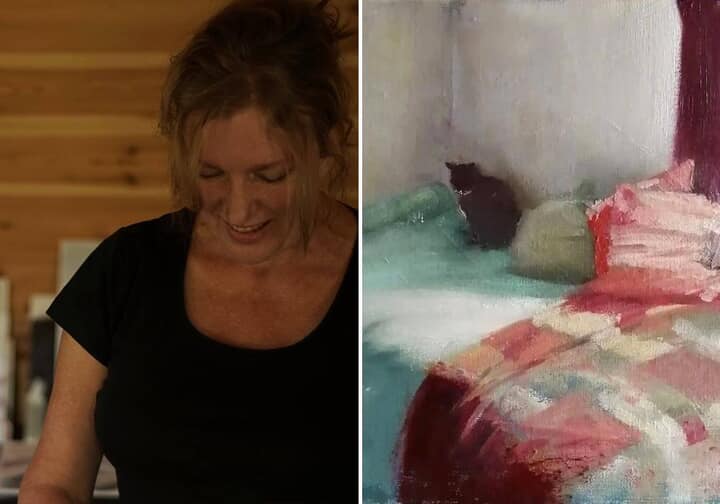
An almost perfectly organised cutlery drawer; an unwrapped chocolate bar; the lights of a motorway obscured by a rainy windscreen: Rosemary Burn’s intimate-scale paintings imbue the trappings of everyday life with a quiet sense of profundity. Taken together, rendered in her distinctive painterly style, these retellings of easily-forgotten moments demonstrate how an ordinary life, when examined from a certain perspective, begins to radiate a palpable sense of significance.
Mona Sultan
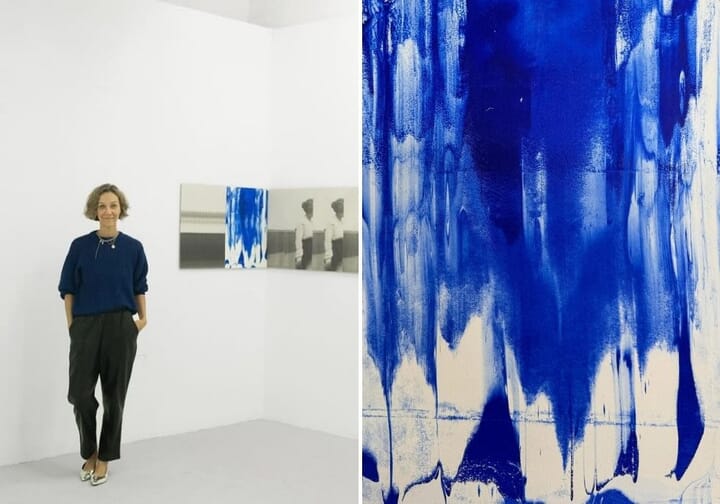
Mona Sultan’s photocollages describe the fragmentary nature of memory and meaning, calling photographic truth into question by breaking down, recontextualising and repeating images. Our experience of the world is disjointed, incomplete and pervaded by the unknown; this is the disrupted kind of reality that Sultan’s images seek to reflect.
Kanny Yeung
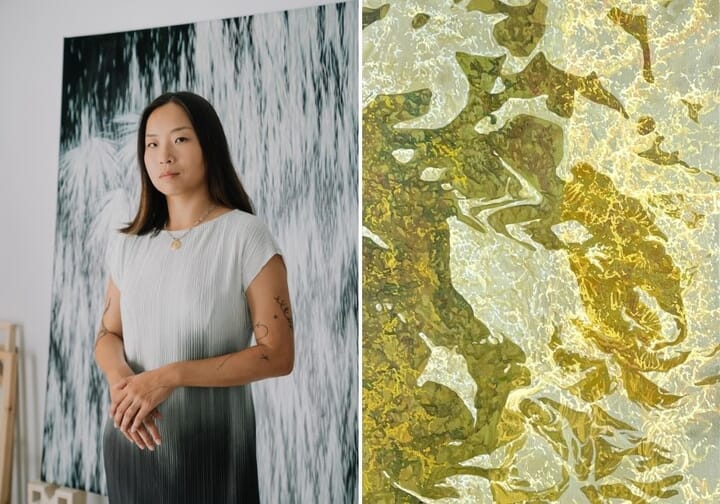
Where does representation break into abstraction? Kanny Yeung’s rhythmic paintings consider water’s many forms and motions: its waves, ripples, undercurrents and reflections, deftly treading the line between the real world and her own painterly imagination.
Luke Rudolf
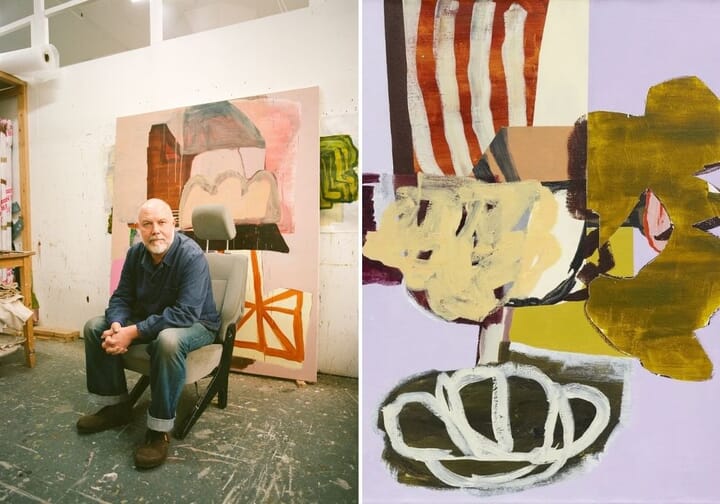
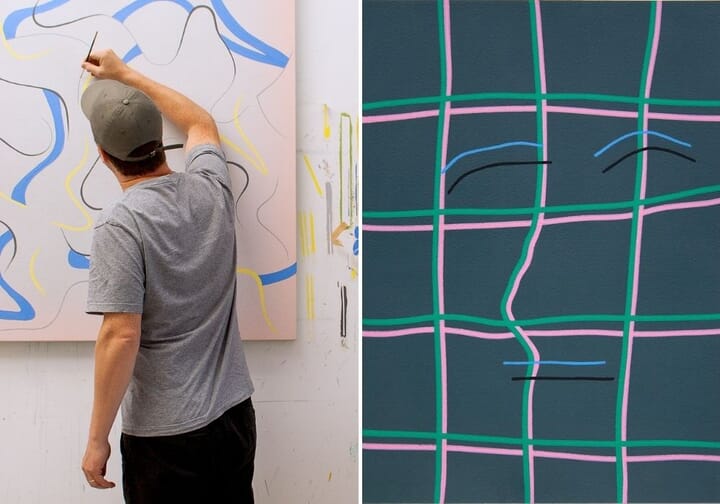
Luke Rudolf’s work translates between the languages of painting and digital imagery. Balancing systematic precision with a distinctly human, necessarily imperfect visual sensibility, his paintings are lighthearted abstractions for the digital age.
Jo Berry
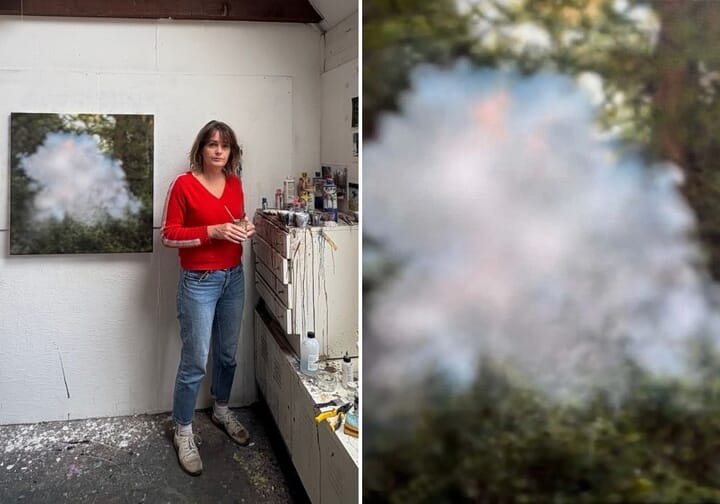
Jo Berry’s airbrushed paintings give physical forms to images that we normally see via a screen and quickly forget, such as stock photographs and ReCAPTCHAs. To me, her distinctive language – hazy, distorted, subtly unsettling – reflects the alienation and dissociation inherent in a world saturated with imagery that seems to appear and disappear ever-more quickly.
Emile Kees
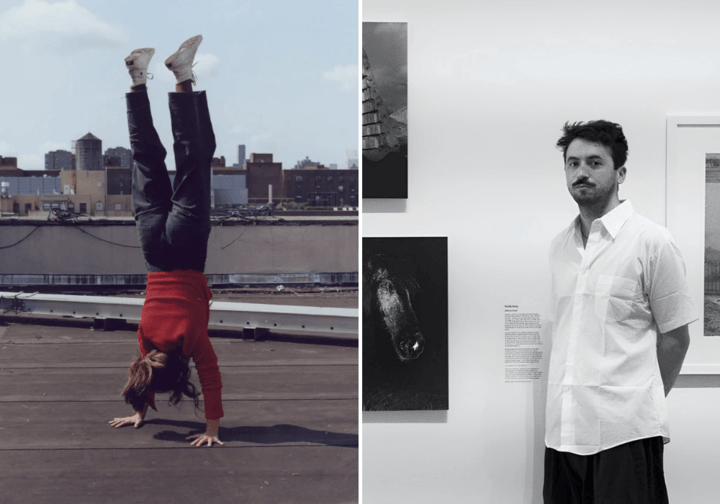
With a unique sensitivity to form and composition, Emile Kees’ photographs make monuments of the ephemeral. A shadow, a handstand, a sheer curtain draped over a houseplant: by photographing such things, he gives them a second life in which they become permanent.
Jo Hummel
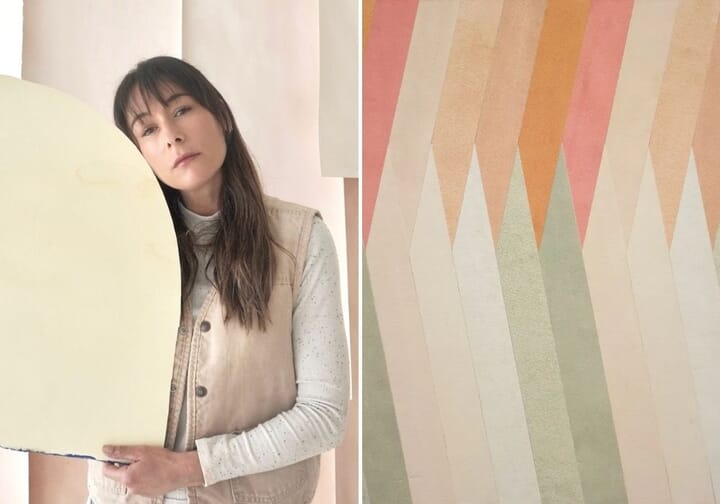
Jo Hummel’s minimalist abstractions have a certain ahistorical quality; they connect multiple histories of material experimentation and creation from around the world within a unique visual language. They feel to me like open-ended meditations on a broad set of binaries: craft and art; symmetry and asymmetry; surface and depth.
Lluís-Carles Pericó
Lluís-Carles Pericó’s landscapes are mostly painted from memory, which might explain the dreamlike tone that they strike. They situate the viewer within landscapes that feel endless with a low mist hanging over the horizon. Though unfamiliar, these images are deeply peaceful, inviting you to revel in the simple pleasures of a perpetually twilit, pastoral world.
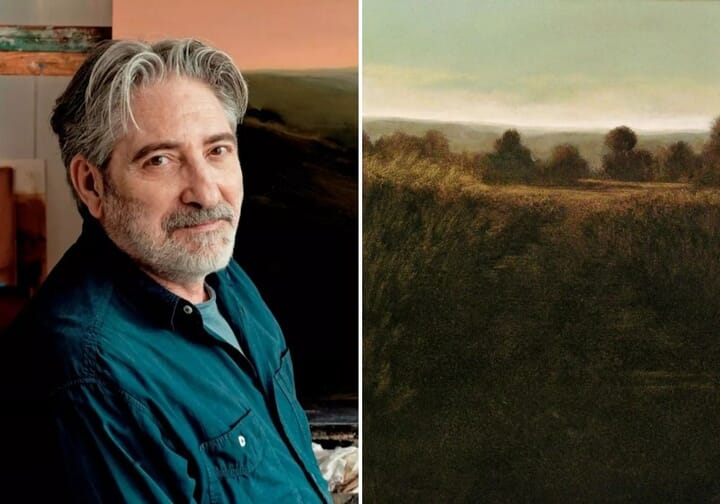
Bianca MacCall
The scenes that Bianca MacCall paints – a train window reflecting the carriage’s interior over the passing landscape; a barely-visible car concealed by an ochre-yellow curtain – seem deliberately mysterious. They’re presented without context and cropped with a cinematic sensibility. They make me think about the simultaneous absurdity and beauty of the world in front of me, considering familiar scenes through an unfamiliar lens.
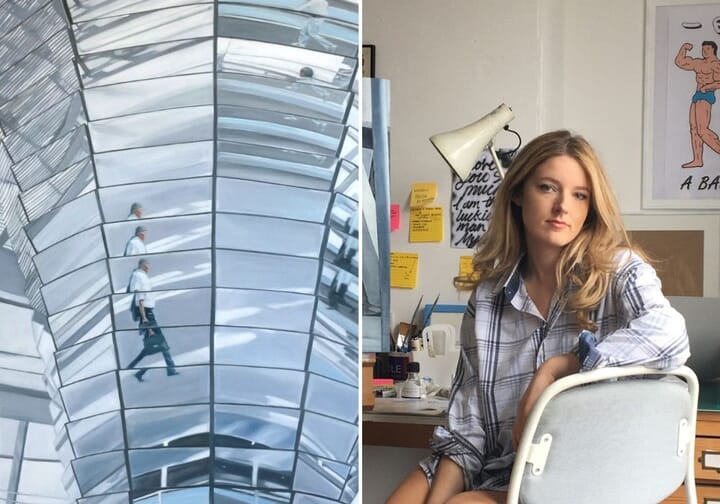
Henry Ward
Henry Ward’s painting practice is ever-shifting. In fact, if you stand in front of one of his paintings for long enough, you might see it change in real time. For me, his work lurches between pure abstraction – the simple but infinite pleasure of collisions of colour and shape – and forms that take the shape of unidentifiable things. The unsettled, unpredictable nature of his work is what makes me keep returning to it.