%20--%3e%3csvg%20version='1.1'%20id='Layer_1'%20xmlns='http://www.w3.org/2000/svg'%20xmlns:xlink='http://www.w3.org/1999/xlink'%20x='0px'%20y='0px'%20viewBox='0%200%201440%20384.8'%20style='enable-background:new%200%200%201440%20384.8;'%20xml:space='preserve'%3e%3cstyle%20type='text/css'%3e%20.st0{fill:%23010101;}%20%3c/style%3e%3cg%3e%3cpath%20class='st0'%20d='M156.5,162.6c0,32.3-14.1,52.7-42.3,61.1l51.3,71.2h-42.1L76.6,229H33.1v65.9H0v-196h72.9%20c29.9,0,51.3,5,64.2,15.1C150,124.2,156.5,140.3,156.5,162.6z%20M112.5,190.3c6.7-5.8,10.1-15.1,10.1-27.9c0-12.8-3.5-21.6-10.4-26.4%20c-6.9-4.8-19.3-7.2-37-7.2H33.1V199h41.2C93,199,105.7,196.1,112.5,190.3z'/%3e%3cpath%20class='st0'%20d='M407.1,124.7c-9.6,0-17.5,2-23.7,5.9c-6.2,3.9-9.3,9.9-9.3,17.8c0,7.9,3.1,14,9.3,18.2%20c6.2,4.2,19.3,8.7,39.4,13.6c20.1,4.9,35.2,11.7,45.4,20.5c10.2,8.8,15.3,21.7,15.3,38.8c0,17.1-6.5,31-19.3,41.6%20c-12.9,10.7-29.8,16-50.8,16c-30.7,0-57.9-10.6-81.6-31.7l20.8-25c19.8,17.2,40.4,25.8,61.7,25.8c10.7,0,19.1-2.3,25.4-6.9%20c6.3-4.6,9.4-10.7,9.4-18.2c0-7.6-2.9-13.5-8.8-17.7c-5.9-4.2-16-8-30.4-11.5c-14.4-3.5-25.3-6.6-32.8-9.5%20c-7.5-2.9-14.1-6.7-19.9-11.4c-11.6-8.8-17.4-22.2-17.4-40.4s6.6-32.1,19.8-41.9c13.2-9.8,29.5-14.7,48.9-14.7%20c12.5,0,25,2.1,37.3,6.2c12.3,4.1,23,9.9,32,17.4l-17.7,25c-5.8-5.2-13.7-9.5-23.6-12.9C426.5,126.4,416.7,124.7,407.1,124.7z'/%3e%3cpath%20class='st0'%20d='M690.2,98.9V130H585.6v51.9h93.9v29.4h-93.9v52.4h108v31.1H552.5v-196H690.2z'/%3e%3cg%3e%3cpath%20class='st0'%20d='M868.7,250.3l-19.6,44.6h-35.3l86.4-196h35.3l86.4,196h-35.3l-19.6-44.6H868.7z%20M953.4,219.8L917.8,139%20l-35.6,80.8H953.4z'/%3e%3cpath%20class='st0'%20d='M1233.6,162.6c0,32.3-14.1,52.7-42.3,61.1l51.3,71.2h-42.1l-46.8-65.9h-43.5v65.9h-33.1v-196h72.9%20c29.9,0,51.3,5,64.2,15.1C1227.1,124.2,1233.6,140.3,1233.6,162.6z%20M1189.6,190.3c6.7-5.8,10.1-15.1,10.1-27.9%20c0-12.8-3.5-21.6-10.4-26.4c-6.9-4.8-19.3-7.2-37-7.2h-42.1V199h41.2C1170.1,199,1182.8,196.1,1189.6,190.3z'/%3e%3cpath%20class='st0'%20d='M1380.5,129.2v165.7h-33.1V129.2H1288V98.9h152v30.3H1380.5z'/%3e%3c/g%3e%3cg%3e%3crect%20x='234.9'%20y='0'%20class='st0'%20width='29.1'%20height='384.8'/%3e%3c/g%3e%3c/g%3e%3c/svg%3e)
Henry Ward: House of Hulda Residency | Rise Art
Henry Ward: The Rise Art Residency at House of Hulda, Norway

Artist in Residence
Henry Ward
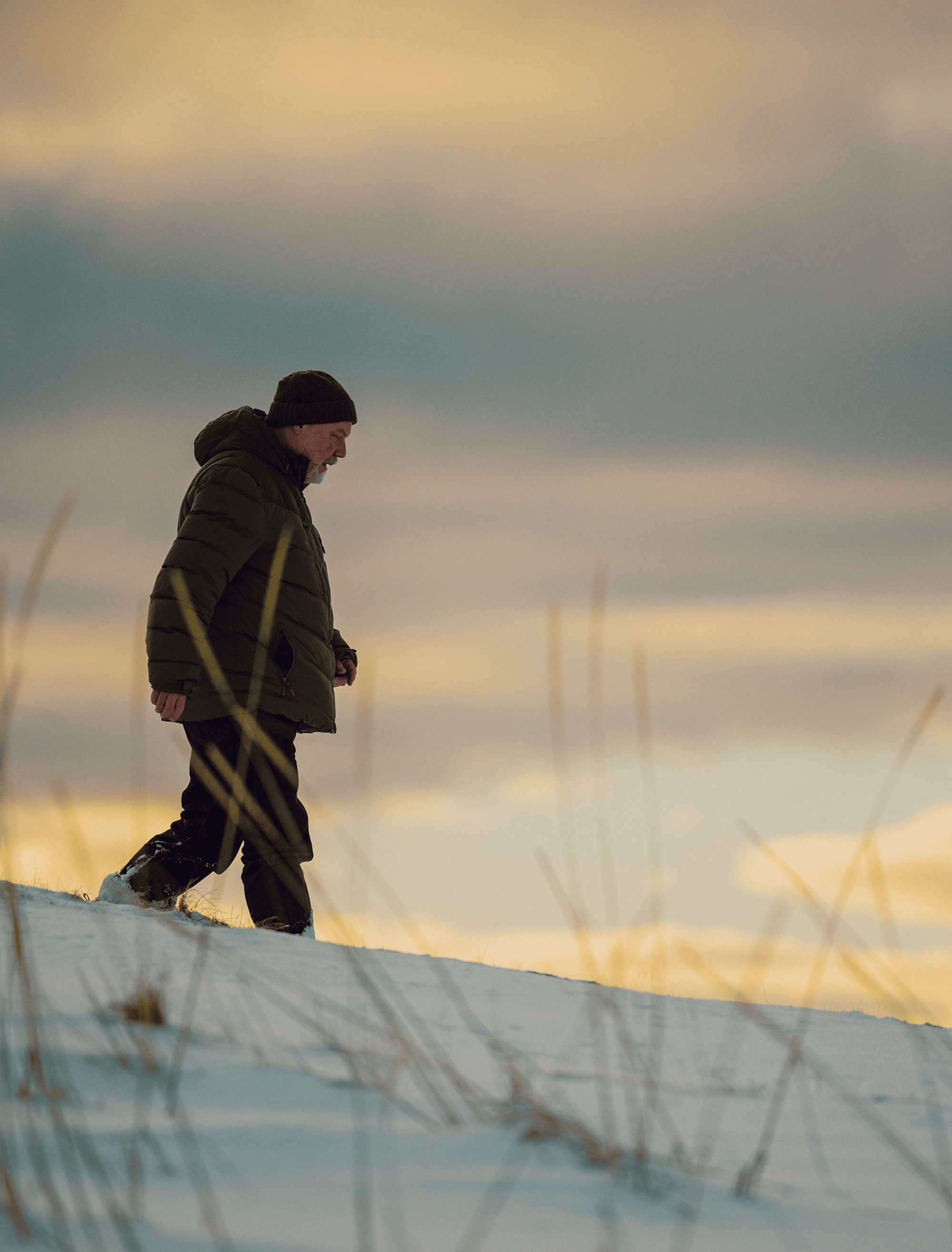
In collaboration with Rise Art, House of Hulda hosted the painter Henry Ward as an artist in residence.
Rise Art and House of Hulda welcomed Henry Ward to the first in an ongoing residency partnership, inviting a departure from the familiar parameters of his kitchen, shed and studio environs to observe how his practice might evolve.
During his residency in Andøya, Norway, Ward embraced the uncertainty of this shift. Long drawn to residencies for their capacity to unsettle habitual processes, he found the landscape, with its vast horizons and ethereal light, quietly imprinting itself on the works he began there.
While his approach remained instinctive and largely unchanged at the outset, subtle variations began to emerge as the Vesterålen environment slowly edged in.
Rise Art shines a light on today's most dynamic and culturally significant artists, collaborating directly with a curated roster of emerging, mid-career, and established creatives worldwide.
House of Hulda is a registered non-profit organisation aiming to provide artists with much needed space and time to develop their practice and find inspiration. All proceeds go towards upkeep, development and growth of the home-and-studio space they occupy in the small village of Stave, Andøya.
Photography courtesy of Mariell Lind Hansen, co-founder of House of Hulda.
“The residency at House of Hulda was an incredible, almost otherworldly, experience. Spending time alone in such a beautiful wilderness was amazing. Whilst I didn’t go with the specific intention of finding inspiration in the landscape, I was struck by how being there affected the work I was making. Having brought everything back to my London studio, I can now see a real shift in the palette and an evolution of form, with horizons creeping in.”
– Henry Ward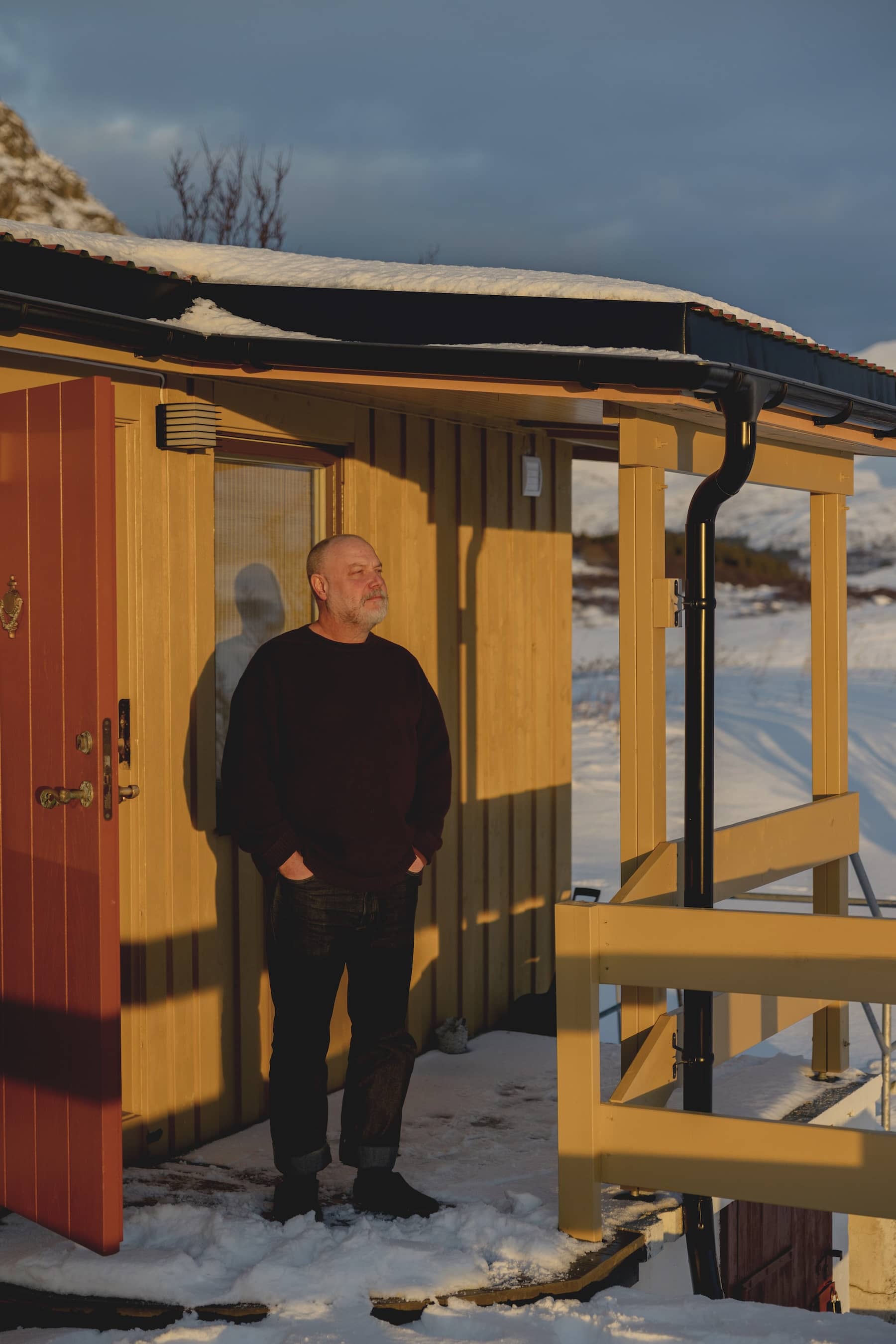
About Henry Ward
Henry Ward works across three sites: his studio, his shed and at his kitchen table. Painter, sculptor, writer and educator, the artist embraces a discursive approach to making. Born in Woolwich, London, in 1971, he has spent over three decades navigating the shifting boundaries between the real and the abstract.
view artist profilefeatured works
“Despite their abstract nature, the landscape and light of Andøya find their way into Henry Ward's paintings from his time at Hulda. Their forms give the monolithic impression of snow-capped mountains, evoking both sublimity and peace.”
– Phin Jennings, Rise Art CuratorIn Conversation: Henry Ward
How did your instinctive, process-led approach adapt in a new and unfamiliar environment?
I began in a familiar mode, approaching the work much as I would in my studio or shed, without any conscious intention to alter my process. Yet, in retrospect, certain differences emerged – small deviations that seem to have been prompted by context and atmospheric registers rather than decision.
What role did solitude, or isolation, play during the residency?
It was both significant and generative. There’s an initial period of adjustment, but once that passed, the absence of everyday distraction became invaluable. It allowed for a slower, more sustained engagement with thought.
Did the residency generate ideas or methods you might bring back into your teaching or mentoring?
Perhaps less in terms of teaching directly, but it has prompted a great deal of reflection and writing. Since returning, that impulse to write has continued to expand alongside the work.